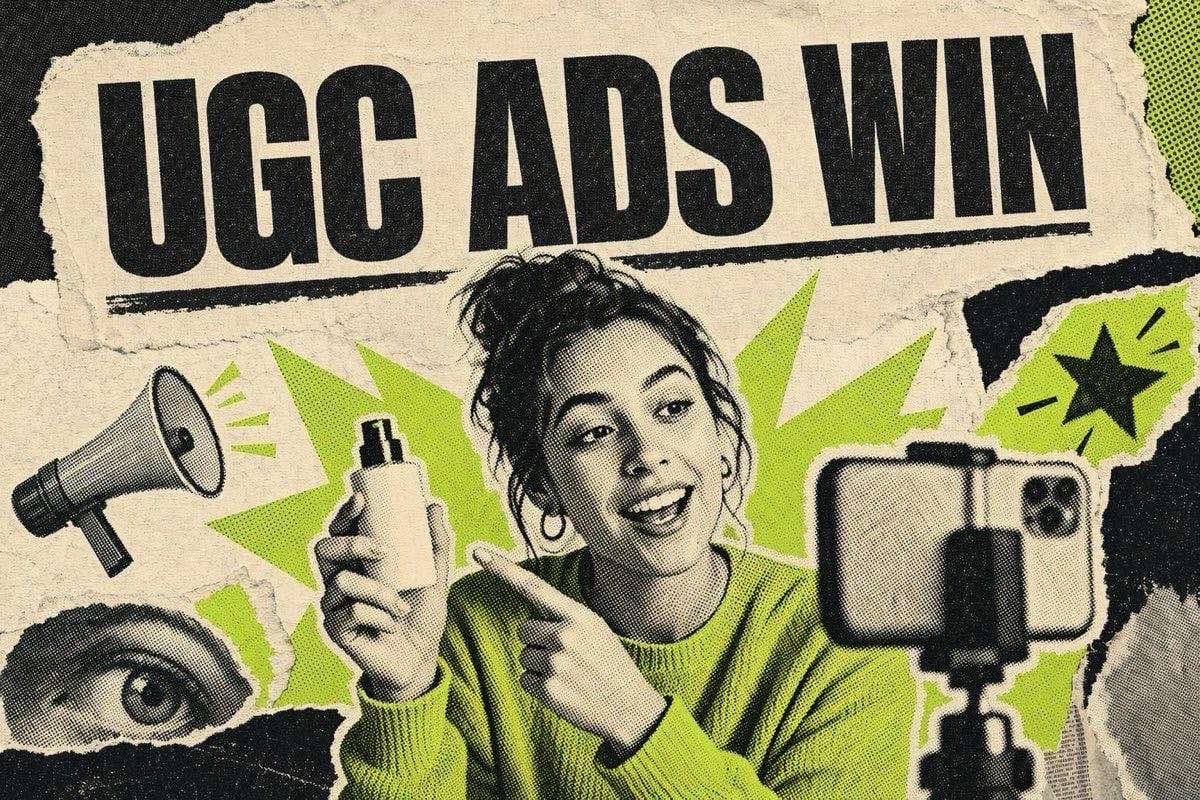
To run UGC ads, you commission phone-native videos from creators or customers, secure the right to run them as paid ads, brief each creator on one angle with several hook variations, test those hooks on Meta against cost per result, and keep a pipeline of fresh videos so winners can be replaced before they fatigue. The video is the easy part. Most brands lose money on the system around it.
This is the operating manual: sourcing, rates and rights, briefs, scripts, testing and scaling. If you want the anatomy of the format itself (the structural beats, shot types and sub-formats like unboxing or green screen), read our UGC ad format breakdown first. That page covers what a UGC ad is made of. This one covers how to produce and run them every month without the process falling apart.
The UGC ad pipeline at a glance
- Stage — What you produce — Where it usually breaks
- Plan — 2 to 3 angles, a deliverables list — Briefing "the product" instead of one angle
- Source — A shortlist of creators or customers — Picking on follower count instead of on-camera delivery
- Contract — Rates, usage term, channels, permissions in writing — Running a video as an ad with no paid usage rights
- Brief — One page per creator — Word-for-word scripts that kill the authenticity
- Script — Hook variations plus one shared body — One hook per video, so nothing to test
- Test — 12 to 18 assets in a hook test — Judging winners on CTR instead of cost per result
- Scale — Iterations on the winning creator and angle — Starting from zero every month
Every section below maps to one row.
Step 1: Decide what you need before you contact anyone
Sourcing first and planning later is the most expensive order. Before you message a single creator, write down three things.
The angles you want to test. An angle is the reason someone buys: it saves time, fixes an embarrassing problem, beats a cheaper alternative, or makes a good gift. Pick two or three, not seven. Each creator gets one.
The deliverables per creator. A practical default is one 20 to 40 second body plus three alternative opening lines, filmed vertically, with captions-safe framing and the raw footage included. Three hooks on one body turn one video into three testable ads.
How many creators. You need enough to separate "this angle works" from "this person is likeable." Three creators per angle is a reasonable floor. With fewer, you can't tell whether a winner won because of the message or the face.
If you already know your angles but need opening lines, pull candidates from the hook bank before you brief anyone. It is far cheaper to argue about hooks in a document than in a reshoot.
Step 2: Source creators
There are four realistic places to find UGC talent, and they are not equal.
Your own customers are the best source and the most underused. A post-purchase email asking for a short phone video, with a small product credit as thanks, produces footage no hired creator can match: real reactions, real bathrooms, real accents. You need written permission to run it as an ad (more on that below), and quality will vary. That variance is part of why it works.
Creators already in your niche on Instagram know the category's language because they already film for it. If you plan to run ads from their handle, Meta Business Suite has a Creator Marketing Hub where advertisers send and manage partnership ad permissions, according to Instagram's Help Centre. Setting that up at the start saves a renegotiation later.
UGC marketplaces match brands with creators who make content for brand use rather than for their own audience. They are fast, and pricing is usually transparent, but the creator pool sees a lot of briefs, so delivery can feel templated. Ask for unscripted samples.
Inbound pitches start arriving once you run UGC ads for a while. Judge them the same way as everyone else.
To judge a creator, watch a sample with the sound off, then with the sound on. You want someone who is watchable in the first two seconds, sounds like a person rather than a presenter, and films clean audio in decent light. Follower count barely matters for UGC ads, because the ad runs from your account or as a partnership ad, not as an organic post to their audience.
Step 3: Rates, usage rights and permissions

There is no official rate card for UGC, so treat any number as a market reference, not a quote. Billo, a UGC marketplace with an obvious interest in the topic, puts the average UGC piece at around $198 and notes that usage rights and allowlisting "can easily double or triple costs." That second point surprises most brands. The video fee and the right to put paid media behind it are separate things, so price them separately.
A workable creator agreement covers:
- Deliverables: number of videos, hook variations, length, aspect ratio, and whether you get raw footage.
- Usage term: how long you may run the content as paid media. Short terms (30, 60 or 90 days) cost less. Perpetual costs the most.
- Channels: paid social only, or also your website, email and product pages.
- Edits: whether you may cut it down, re-caption it, combine it with other footage or swap the hook.
- Exclusivity: whether the creator can make content for a direct competitor during the term. Expect to pay for this.
- Partnership permissions: whether you may run ads from their handle.
- Disclosure: who handles the paid-partnership label.
Apple's Shot on iPhone Challenge is a useful public example of how licensing terms get written. Its official announcement set a one-year license for submitted photos, a photographer credit on any use, a licensing fee for the ten winners whose work ran on billboards and other marketing channels, and exclusive commercial use for photos chosen for billboards. That is a term, a credit, a fee and an exclusivity clause, the skeleton of a good UGC agreement.
Partnership ads (what used to be called whitelisting)
Meta's Help Centre confirms that branded content ads are now called partnership ads. With account-level permission from the creator, an advertiser can create partnership ads from the partner's handle, even without pre-existing content, or boost the partner's existing posts, stories and reels that tag the advertiser. The ad then shows both identities, which tends to read more like a recommendation than an ad from a brand page. Build the permission into the contract so it is not a negotiation after you find a winner.
Disclosure
In the US, the FTC's Disclosures 101 for Social Media Influencers says to disclose any financial, employment, personal or family relationship with a brand, and that for video "the disclosure should be in the video and not just in the description." The paid partnership label handles much of this on Meta, but do not let a creator's script make claims as if they found the product on their own when you sent it to them.
Step 4: Write a brief that protects the authenticity
The classic failure: the brand writes a word-for-word script, the creator reads it, and you get a bad TV commercial filmed on a phone. You paid for a real person, then briefed that person out of the video.
A good brief controls the structure and leaves the delivery to the creator. Keep it to one page:
- One angle. "This video is about falling asleep faster." Not five benefits.
- Three mandatory beats. A hook in the first three seconds, one proof moment (a demo, a result, a before and after), and one clear call to action. The creator writes the actual sentences.
- Three hook lines to film. Give them the concepts and let them phrase each one in their own words.
- Claim guardrails. What they cannot say: medical claims, guaranteed results, named competitor comparisons, invented numbers.
- Format. Vertical 9:16, 20 to 40 seconds, natural light, clean audio, no background music (you add sound in the edit), product label visible at least once.
- References. Two or three ads whose energy you want, not whose words you want.
Our ad hook formulas for ecommerce give you fill-in structures you can drop straight into the hook section of a brief.
Step 5: Script the beats, not the lines
Even with an unscripted delivery, the creator and the brand both need to agree on a skeleton. This one fits most direct-response UGC:
- Time — Beat — What the creator does
- 0 to 3s — Hook — States the problem, the result or the doubt, on camera, mid-thought
- 3 to 10s — Context — Why this mattered to them, in their own words
- 10 to 25s — Proof — Shows the product doing the thing: a demo, a result, a texture, a before and after
- 25 to 35s — Payoff and CTA — What changed, and one specific next step
The UGC script generator drafts this skeleton from a product description, which gives you a faster starting point for a brief than a blank page. Treat its output as beats for the creator to interpret, not lines to read.
Step 6: Test UGC on Meta without burning budget
A minimal test structure:
- Start with a batch. Three creators, one angle each, three hooks each, gives you nine assets. Two angles gives you eighteen. That is enough for a real signal on a modest budget.
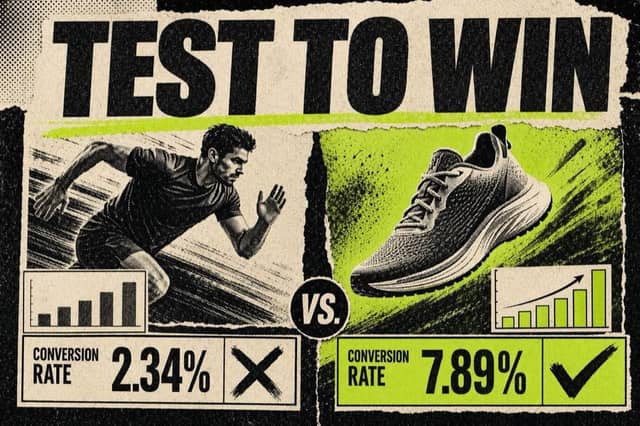
- Test hooks first. Same body, different opening lines. The opening decides whether anyone sees the rest, so it is the cheapest variable to fix. Watch the share of impressions that turn into three-second views (often called hook rate) and how long people keep watching (hold rate).
- Judge on cost per result. UGC can pull curious clicks from people who never buy. Click-through rate is a diagnostic, not the verdict.
- Cap spend per asset. Decide in advance how much each asset gets before you kill it, and stick to it.
For budget mechanics and how long to let a test run, our guide to A/B testing ad creatives without wasting budget covers the setup in detail.
Step 7: Scale and refresh
Scaling UGC is mostly iteration on what already won, not new exploration:
- New hooks on the winning body are the cheapest win available. Ask the same creator for five more openers.
- New creators on the winning script tell you whether the message or the person carried the result.
- New cuts: a 4:5 version for Feed, a shorter cut for Reels and Stories, a version with a different first frame.
- Partnership ads on the winners. If you secured the permission, run the winning video from the creator's handle as well.
- Keep a standing pipeline, because every winner fatigues. When frequency climbs and cost per result drifts up, the next batch should already be filmed. Our breakdown of Facebook ad creative fatigue covers the warning signs.
UGC ad examples worth studying
True classic: creator content as the main creative engine
Menswear brand True Classic passed $100 million in revenue and reached profitability within its first two years, per Retail TouchPoints. Ben Yahalom, then its president, told the publication that "UGC is absolutely huge for us." The detail worth stealing is his view that "creative is the new targeting." Instead of narrowing audiences by hand, the team makes creative aimed at a type of buyer and lets delivery find them. His example: a UGC video featuring a female creator naturally skews toward female viewers without being targeted that way. For a UGC program, that makes casting a targeting decision, because who is on camera decides who sees the ad.
Apple shot on iPhone: customer content, licensed properly
Apple's long-running campaign shows the other end of UGC: real customer work, not commissioned creator content, run in paid placements. The 2019 challenge terms spelled out the license, the credit and the fee in public, which makes it a useful model. Our Shot on iPhone teardown breaks down why customer-made content worked as the product demo.
What both have in common
Neither treats UGC as a one-off asset. Both run it as a system: many pieces, clear rights, constant replacement. For more reverse-engineered examples, the teardowns take winning ads apart beat by beat.
Where AI UGC fits

AI tools can now generate UGC-style videos with synthetic actors. Teams mostly use them for fast, cheap hook and angle testing before paying a human creator for the version that gets scaled. What generated UGC does to the trust the format depends on is still an open question, and our UGC format breakdown covers it in detail, including operators' own accounts. For the tools themselves, see the AI UGC ad generators roundup.
On policy: Meta requires advertisers to disclose when an ad about social issues, elections or politics "contains a photorealistic image or video, or realistic sounding audio, that was digitally created or altered." Commercial product ads fall outside that rule, but check Meta's current advertising standards before you scale synthetic people, because the rules keep moving.
FAQ
How much do UGC ads cost?
There is no standard rate. Billo, a UGC marketplace, puts the average piece at around $198 and says usage rights and allowlisting can double or triple the cost. Budget the video and the paid usage term as two separate line items, and ask every creator to quote both.
Do I need permission to run a creator's video as an ad?
Yes. Get written permission that names the usage term, the channels (paid social, website, email) and whether you can edit the footage. A creator posting a video about your product doesn't give you the right to put ad spend behind it. Put the terms in the agreement before filming.
What is the difference between a UGC ad and a partnership ad?
UGC describes the content style: phone-filmed, first person, unpolished. A partnership ad describes how the ad runs on Meta: from the creator's handle alongside yours, with their permission. A UGC video can run from your brand page or as a partnership ad, and many brands test both.
How many UGC ads should I test at once?
Enough to separate the message from the messenger. A practical starting batch is nine to eighteen assets: three creators per angle, each filming three hooks on the same body. Judge them on cost per result, kill losers at a spend cap you set in advance, and rebuild from the winning combination.
Do UGC ads work for B2B and SaaS?
Yes, with adjusted formats. Founder videos filmed on a phone, screen recordings with a talking head, and "how I use this tool every morning" walkthroughs all rely on the same peer-trust mechanism. Only the setting changes, from a bathroom counter to a desk. Our SaaS Facebook ad examples show the pattern.
Build your first batch this week
Write two angles, pick three creators for each, and brief every one of them for three hooks on one body. Draft the beats with the free UGC script generator, then pull opening lines from the hook bank's 118 frameworks so every creator walks into the shoot with tested structures instead of a blank page.
The AI Ad-Making Kit
$99Make hyperreal AI video and image ads for any brand, with free AI tools. No camera, no agency.
- 10 modules
- 300+ hooks
- 500+ prompts
Canva ad templates, free.
Proven D2C ad layouts. Swap in your product, export, launch.
Browse templates →Want to act on what you just read?
Browse 3,400+ free, Canva-ready ad templates sorted by industry. One click to open, five minutes to customise.
Browse Free Templates