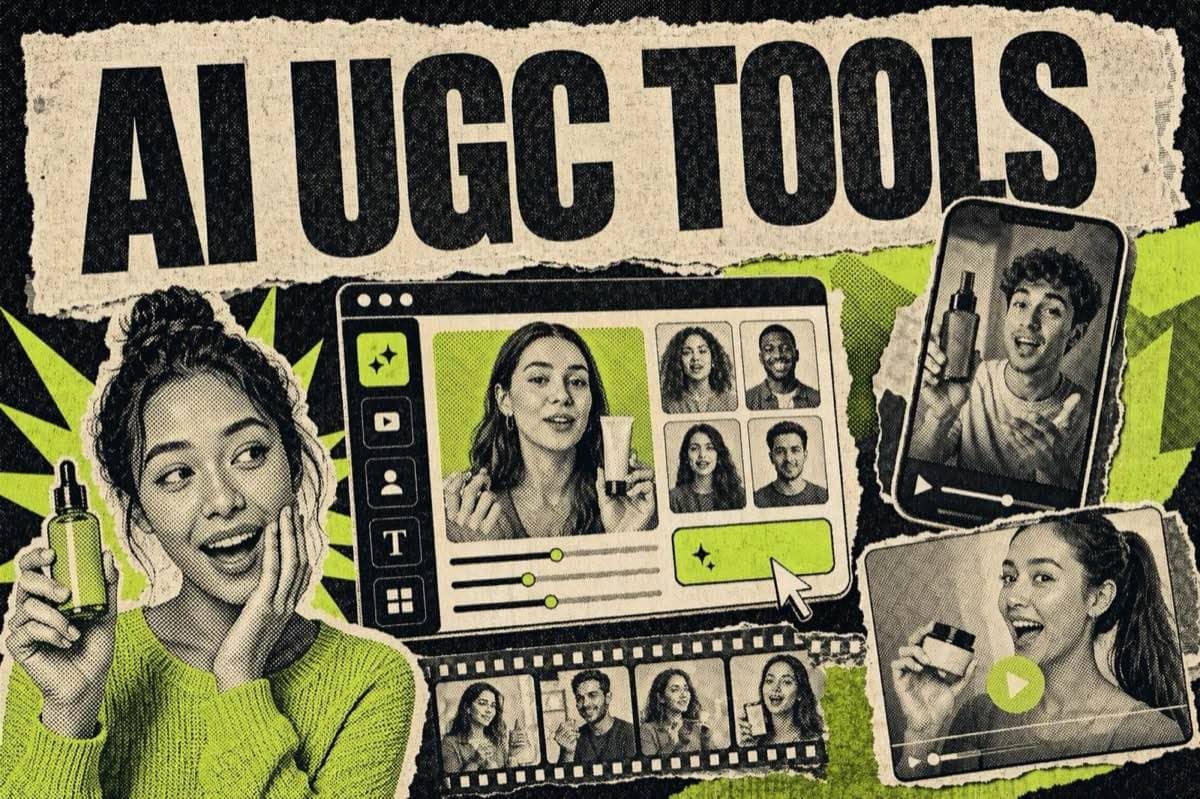
AI UGC tools generate creator-style video ads with AI actors, so you don't have to hire and brief a human creator. You write or paste a script, pick an avatar, and get a talking-head video ready for Meta, Instagram Reels or YouTube Shorts in minutes rather than days. Below are 11 real tools that are operating today, what each one is built for, and where AI-generated UGC still can't fully replace a human creator.
This roundup is neutral. None of these tools are ours, and we don't sell an ad generator. The order isn't a ranking either. The tools are roughly grouped by primary use case. Whichever tool you pick, our 1,500+ AI prompt library covers the scripting side for free, with structures for hooks, scripts and ad copy across categories.
How these tools actually work
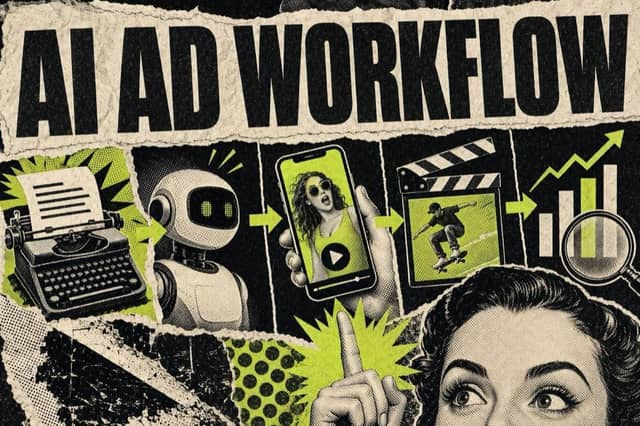
Nearly every tool on this list runs the same pipeline. You give it a script (or a product URL it turns into a script), pick an AI avatar from its library or build a custom one, and the tool generates lip-synced video with a voice that you export as a vertical, ad-ready clip. Where tools differ is avatar realism, script automation, editing depth, and how many variations you can generate at once for testing.
The category exists because performance marketing has a cost problem. A single studio shoot or a batch of hired creators can run into thousands of dollars before one ad goes live, and testing multiple hooks the traditional way multiplies that cost per variation. AI UGC tools cut it to a subscription fee and a few minutes of generation time per clip. That's why media buyers now treat them as a standard part of the testing toolkit and not a novelty.
"AI UGC" means two different things depending on the tool. Some platforms generate a fully synthetic actor and voice from a script. Others repurpose real footage (yours or a creator's) with AI-assisted editing. Check which kind a tool is before you sign up and you won't waste a trial.
One compliance detail applies to all of them. Meta requires disclosure for ads containing an AI-generated photorealistic human, and undisclosed AI content has become the third-largest reason for ad rejections in 2026, accounting for roughly 14% of all rejections, according to AuditSocials' 2026 policy tracker. Whichever tool you use, label the ad before you scale spend.
11 AI UGC ad generators
1. Arcads
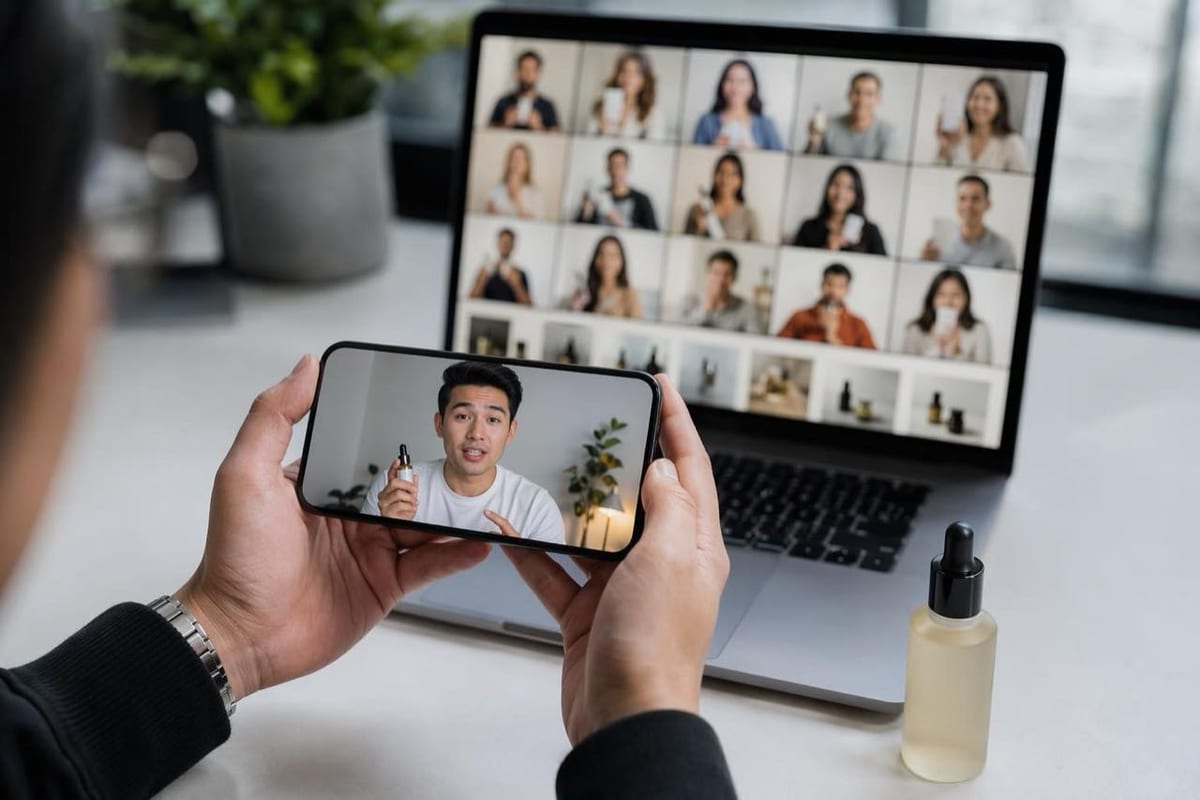
Arcads is built for direct-response, talking-head ad creative: a person explaining a product, handling an objection, or delivering a testimonial-style hook. Its library has over 1,000 AI actors across demographics and settings, and most clips generate in one to two minutes once a script is in. It suits performance marketers who need fast hook testing at volume more than a single polished brand video.
2. Creatify
Creatify's main feature is URL-to-video. Paste a product page from Amazon, Etsy, or your own store and it generates a full video ad script, avatar, and visuals automatically. It has 500+ avatars and 170+ voices across 29+ languages. A batch mode generates multiple ad variations from one product link, so you can test several hooks or avatars without rebuilding the setup each time.
3. HeyGen
HeyGen built a dedicated UGC Ad Avatars product on top of its broader avatar platform, with 1,100+ avatars and natural lip sync in 175+ languages. Its beta feature, HeyAds, takes one script, pairs it with five avatars, and auto-generates 25 video variants in a few clicks. That makes it a strong fit for teams that want to A/B test avatar choice at scale, not just hook copy.
4. Captions
Captions added its AI Ads feature to an already-popular captioning and video-editing app. Paste a product or landing page URL and it pre-fills a UGC-style script pulled from the page, which you then edit for brand voice. It works with your own filmed footage and with AI avatars from a community library, so it sits between fully AI-generated and fully human-shot UGC.
5. Icon
Icon (icon.com) pitches itself as an end-to-end "AI Admaker." It tags scenes from your existing video library as reusable clips, then a script-generation assistant (AdGPT) matches new ad scripts to that footage, producing ads described as 80-99% complete without a new shoot. It costs more than most tools on this list and fits brands with a library of raw footage to mine, not teams starting from zero.
6. Predis.ai
Predis.ai turns a product URL into a full UGC-style script, voiceover, and avatar-matched video. It supports 19+ languages and lets you set avatar ethnicity, age, and gender. Because it lives inside a broader all-in-one social marketing platform with scheduling and analytics, it fits teams that want UGC generation bundled with their content calendar instead of a standalone ad tool.
7. Pictory
Pictory is closer to general-purpose video generation than UGC. Its AI Video Ad Maker automates scene creation, captions, and voiceover from text or product details, with export presets for Meta, YouTube, and LinkedIn ads. It fits teams that need fast text-to-video ad production and don't need a hyper-realistic talking-head avatar at the center.
8. InVideo
InVideo's AI UGC generator offers two things: "Human Virtual Actor" clips of real actors filmed across regions including the US, UK, Africa, India, and Asia, and a generative AI avatar library. Script control goes second by second over dialogue, split-screens, and reactions. The regional actor range sets it apart for brands targeting specific geographies with a presenter who feels local.
9. Vidyo.ai
Vidyo.ai is mainly for repurposing long-form video into short, platform-ready clips, not generating UGC from scratch. It detects the most engaging moments in existing footage (a podcast, a webinar, a longer ad) and cuts them into vertical, caption-ready clips. It fits brands with long-form video sitting unused more than teams starting from a blank script.
10. Synthesia
Synthesia is the enterprise end of this list: 230+ stock avatars, 140+ languages, and strong brand-kit and compliance controls built for regulated industries. Its output looks more polished than a typical UGC ad, which is deliberately rough. That makes it better for scaled explainer and product-demo content than for scrappy, high-volume hook testing.
11. MakeUGC
MakeUGC centers on AI actors delivering scripted, testimonial-style hooks, with an AI Hook Generator and AI Ad Script Writer built into the same tool. It has 100+ avatars and generates talking-head videos in 2-10 minutes. Hook-only clips can take as little as 5-10 seconds, which makes it one of the faster options here for rapid hook iteration.
What AI-generated UGC still can't do
Every tool above solves the same problem: producing talking-head, creator-style video without hiring or scheduling a human. None of them fully solve what made original UGC work in the first place, which is an unscripted reaction from a real person the audience half-recognizes as one of their own.
The data shows the gap. Human-created UGC holds an 81% authenticity rating with consumers, while AI-generated UGC sits noticeably lower at 63%, per Backlinko's 2026 UGC statistics roundup. Some viewers clock an AI actor within seconds, and trust drops sharply once they do. No platform can fully engineer that away, because it comes down to how the human brain reads authenticity cues like micro-expressions and vocal imperfections.
Working media buyers say the same thing less politely. One posted the AI-generated variation Meta auto-produced from their ad in r/PPC, and the verdict was blunt: "Hilarious & horrifying, unreal how bad Meta AI is opposed to other LLMs" (r/PPC). The recurring complaint is the distance between a polished demo and a shippable ad, and that is why the test-with-AI, scale-with-human pattern has held.
Most performance teams have settled on this: use an AI UGC tool to cheaply test which script, hook, and angle wins across a dozen variations, then hand the winning script to a real creator to shoot the scaled, always-on version, which carries trust an AI actor can't fully replicate. Our complete guide to UGC ads covers how to brief that creator once you have a winning angle, and our AI ad generator comparison goes deeper on tool selection beyond the UGC category.
Read tool reviews skeptically
Before you start comparing reviews, know that this category astroturfs. Practitioners in r/PPC have publicly called out AI-tool vendors "using a network of fake AI accounts to spam this subreddit with posts that praise them" (r/PPC). Treat any glowing testimonial for a single tool as marketing until proven otherwise, especially when it seems to surface organically in a forum or comment section. Your own trial credits will tell you more than any list, including this one.
How to pick one (without trying all 11)
Pick the tool that fits the job:
- If you need — Start with
- Fastest hook testing at volume — Arcads or MakeUGC
- Automatic script from a product URL — Creatify or Predis.ai
- Testing multiple avatars per script — HeyGen
- Editing your own filmed footage plus AI avatars — Captions
- Mining existing footage into new ads — Icon or Vidyo.ai
- Regional/native actor variety — InVideo
- Polished, compliant enterprise explainer video — Synthesia
Whichever you pick, the tool only executes the script. None of these will produce a winning ad until the angle and the hook are strong. Pull real, working openers from our free ad hook generator or the prompt library before you touch a video tool.
FAQ
What is the best free AI UGC ad generator?
Most tools on this list have a limited free tier, usually a handful of watermarked credits so you can test the workflow before paying. None give you full, watermark-free production for free. For a free starting point on scripts and hooks, whichever video tool you pick, HookAds' prompt library is free and unrestricted.
Are AI UGC ads as effective as real creator content?
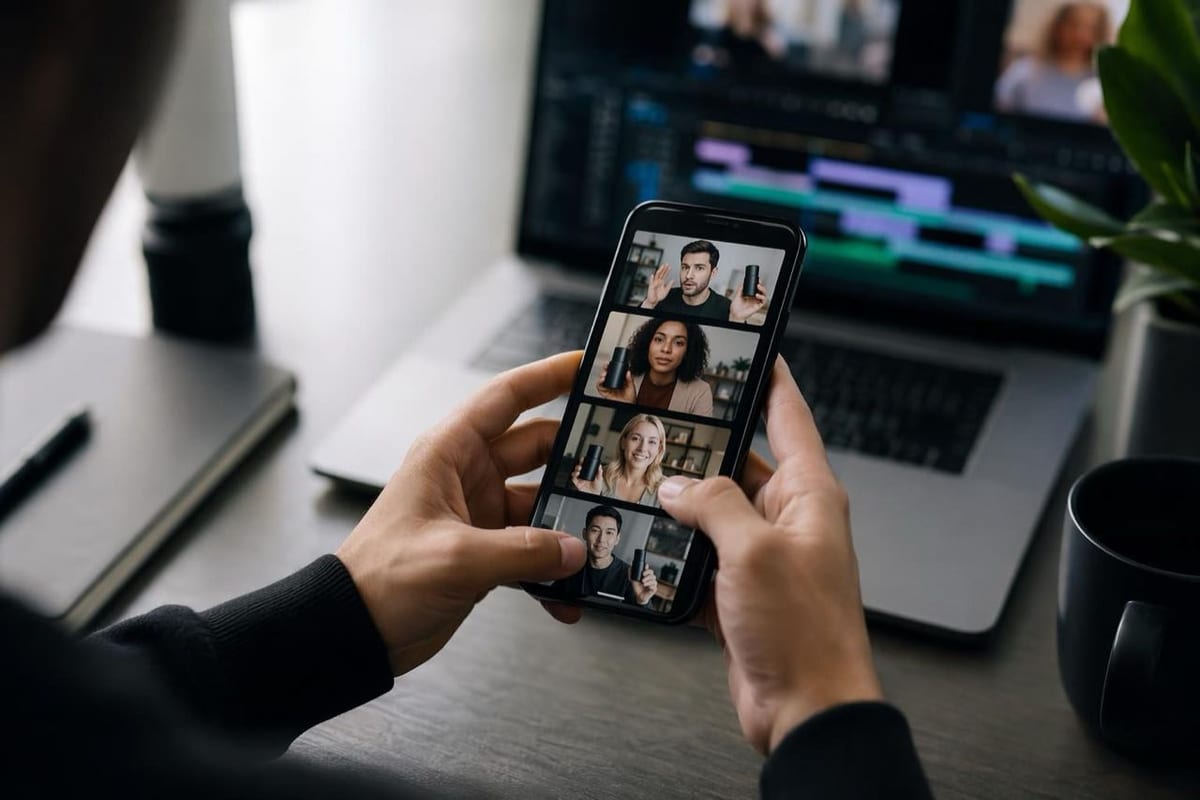
They work well for cheaply testing which script and hook wins before you put budget behind human creators, because generating a dozen script variations with AI costs a fraction of hiring a dozen creators. They work less well as a full replacement for scaled, long-term creator content. Audiences that recognize an AI actor tend to discount the message.
Do I need to disclose AI-generated actors in my ads?
On Meta, yes, in certain contexts. An ad with an AI-generated photorealistic human needs a disclosure label, and undisclosed AI content is now a leading cause of ad rejections. Check the platform's current AI-content policy before you scale any campaign built on an AI avatar.
Can these tools generate ads in multiple languages?
Most of the tools above support multilingual generation, and several cover well over 100 languages with native-accent voice synthesis. Localization is one of the strongest practical uses for AI UGC: you can produce versions of the same script for each market without hiring a separate creator per market.
How much do AI UGC ad generators cost?
Pricing varies widely. Entry tiers run roughly $30-50/month with limited monthly credits, and higher-volume or enterprise plans go up to several hundred dollars a month. Compare the credits or videos included per month against how many variations you plan to test, not just the sticker price.
Test the script before you test the tool
The angle a tool executes matters more than the tool itself. Before you commit to a subscription, pull a real winning hook structure from our ad teardowns, which reverse-engineer actual ads hook by hook, and draft your script from the 1,500+ free AI prompt library. Every week the newsletter carries one new breakdown of a winning hook.
The AI Ad-Making Kit
$99Make hyperreal AI video and image ads for any brand, with free AI tools. No camera, no agency.
- 10 modules
- 300+ hooks
- 500+ prompts
Canva ad templates, free.
Proven D2C ad layouts. Swap in your product, export, launch.
Browse templates →Want to act on what you just read?
Browse 3,400+ free, Canva-ready ad templates sorted by industry. One click to open, five minutes to customise.
Browse Free Templates